

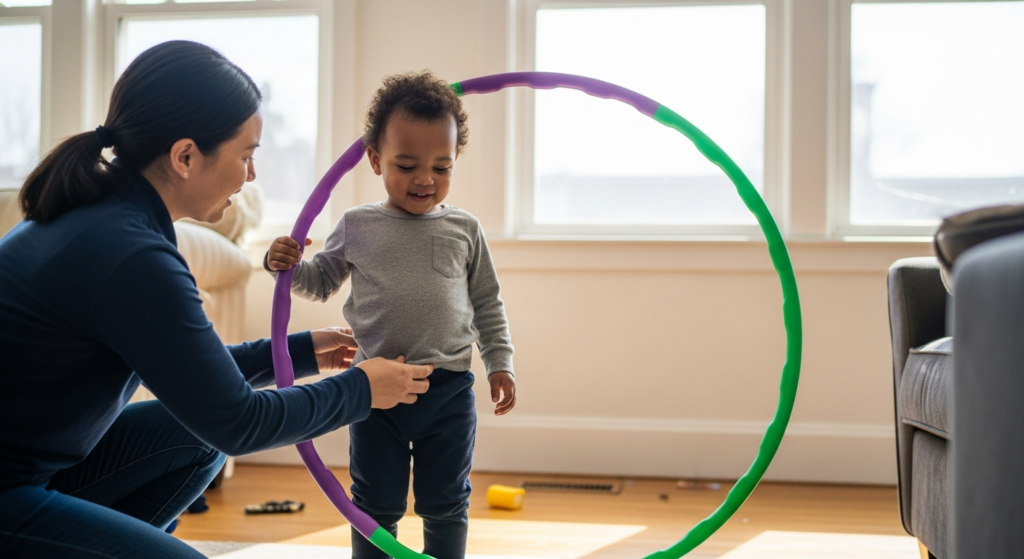
Hula hooping is a fun and engaging activity that helps children improve their coordination, balance, and overall fitness. However, choosing the right hula hoop can make all the difference in how well your child learns and enjoys the activity. In this guide, we’ll cover everything parents need to know to select the perfect hula hoop based on size, material, weight, and other factors.
Quick answer: what size hula hoop does my child need?
Stand the hoop on the floor next to your child: the top should land between their belly button and mid-chest. That means about 28–30 inches for a 6-year-old, 30–32 inches for an 8-year-old and 32–34 inches for a 10-year-old. When you are between two sizes, go bigger — a larger hoop turns more slowly and is easier to learn on. Full age & height charts are below.
Why Choosing the Right Hula Hoop Matters
Selecting the wrong hula hoop can make it difficult for kids to spin and control, leading to frustration. The right hoop enhances their experience, making learning easier and more enjoyable.
Types of Hula Hoops: HDPE vs. PolyPro
Hula hoops are typically made from two primary materials:
- HDPE (High-Density Polyethylene) – Heavier and more durable, making them ideal for beginners and fitness use.
- PolyPro (Polypropylene) – Lighter and more responsive, best suited for advanced users and dance hooping.
For kids, HDPE hoops are recommended as they provide better control and stability while learning.
How to Choose the Right Hoop Size for Your Child
Stand the hoop upright on the floor beside your child. The top of the hoop should land between their belly button and the middle of their chest — anywhere in that band works, and if you are choosing between two sizes, take the bigger one.
Here is why bigger wins: a larger hoop has a longer way to travel on each turn, so it rotates more slowly and gives your child more time to react between pushes. A small, light hoop whips past their waist too fast to correct. Too small is the single most common reason a child gives up in the first week.
Here’s a quick size guide based on your child’s height:
| Child’s Height | Recommended Hoop Diameter |
|---|---|
| Under 115 cm (under 3’9″) | 28 – 30 inches |
| 115 – 134 cm (3’9″ – 4’5″) | 30 – 32 inches |
| 135 – 149 cm (4’5″ – 4’11″) | 32 – 34 inches |
| 150 cm and above (4’11″+) | 34 – 36 inches |
Size Guide Based on Age
If you’re unsure of your child’s height, use the age chart below. You will also see the older rule of thumb “20 + your child’s age = hoop diameter in inches” quoted widely online — treat it as a floor, not a target. It consistently lands 2–4 inches under the belly-button-to-chest band it is meant to approximate, and an undersized hoop is exactly what makes a child quit. Buy from the chart’s range instead.
| Age Group | Recommended Hoop Diameter | Recommended Weight |
| 4 – 6 years | 28 – 30 inches | 450 – 550 g |
| 7 – 9 years | 30 – 32 inches | 500 – 650 g |
| 10 – 12 years | 32 – 34 inches | 600 – 750 g |
| 13 years and above | 34 – 36 inches | 650 – 800 g |
Not sure which row fits your child?
Enter your child’s age or height and get the exact diameter, weight and grip — free, in 10 seconds.
Understanding Hula Hoop Weight
The weight of the hula hoop plays a big role in ease of use:
| User Type | Recommended Weight (grams) |
| Advanced Users | 250 – 300g |
| Beginners | 450 – 700g |
| Fitness Hoopers | 700 – 900g |
For children who are still learning, avoid the ultra-light plastic hoops sold as toys — they spin too fast to control. A hoop in the 450–800 g range (matched to the age chart above) carries enough momentum to turn slowly and stay up, which is what makes it easier. Skip weighted fitness hoops with inner massage nubs entirely: those are built for adult ab workouts, not for a child learning a waist spin. Padded grip tape helps a lot.
Additional Features to Consider
- Adjustability – Some hula hoops come with adjustable sizes to grow with your child.
- Portability – Look for detachable or collapsible hoops for easy storage and transport.
- Attractive Designs – Bright colors and fun patterns can make hula hooping more exciting for kids.
Safety Tips for Kids
- Ensure Supervision – Always watch younger children while they practice.
- Choose a Safe Space – Avoid hard surfaces and keep the area obstacle-free.
- Teach Proper Use – Encourage correct spinning techniques and discourage unsafe behaviors.
Final Thoughts
Choosing the right hula hoop can set your child up for a fun and rewarding experience. Whether they’re hooping for fitness, skill-building, or just pure fun, the right size, weight, and material can make all the difference.
Hula Hoop Size FAQs (by age)
What size hula hoop for a 4–5 year old?
A 28–30 inch hoop, around 450–550 g. Stood upright it should reach between their belly button and mid-chest. Hoops smaller than this spin too fast for a beginner to keep up with.
What size hula hoop for a 6 year old?
Around 28–30 inches, about 450–550 g. Stand it next to them: the top should land between the belly button and mid-chest. The popular “20 + age” rule gives 26 inches here, which sits below the belly button — treat it as a minimum, not the answer.
What size hula hoop for an 8 year old?
About 30–32 inches, around 500–650 g. An HDPE hoop in this range turns slowly enough to give a learning child time to react on every push.
What size hula hoop for a 10 year old?
Around 32–34 inches, about 600–750 g. Taller children can go to the top of that range — a bigger hoop rotates more slowly and is easier, not harder.
Is a bigger or smaller hula hoop easier for kids?
Bigger, heavier hoops spin slower and are easier for beginners to keep going. Smaller, lighter hoops spin faster and suit advanced tricks.
Got the right hoop? The next step is learning to use it.
HoopStar runs small live online hula hoop classes for kids aged 4–18 across India, UAE & USA — and we tell each child exactly which hoop to use.